


Simon’s song cycle, written for John Holiday, showed the potential to be a new American classic in its world premiere performance
SEP 29, 2026
By Harlow Robinson
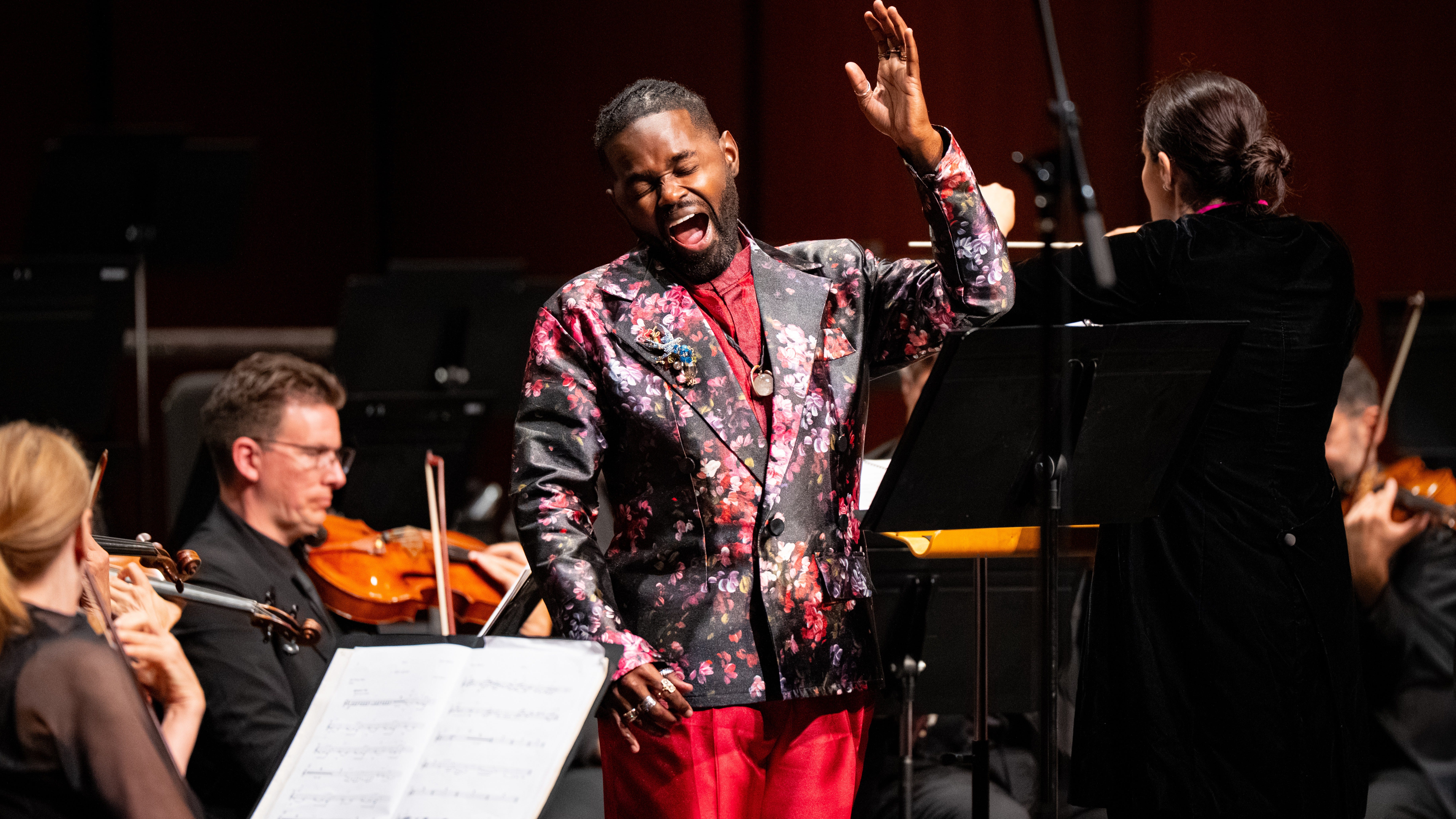
Sounding fresh and engaged, the Los Angeles Chamber Orchestra opened its new season with a shrewdly crafted set of four thematically related works from four different musical cultures.
Guest conductor Lina González-Granados, who presided over the Sept. 26 concert at Zipper Hall in Los Angeles with an easy but disciplined authority, called it a “collage of greatest hits.” And there were a few of those: Hungarian Zoltán Kodály’s paprika-infused Dances of Galanta and Manuel de Falla’s beloved Spanish comic tale, The Three-Cornered Hat. Elegía Andina, a rustic tone poem by Gabriela Lena Frank that incorporates elements of traditional Peruvian music, has become a recent repertoire favorite since its debut in 2000.
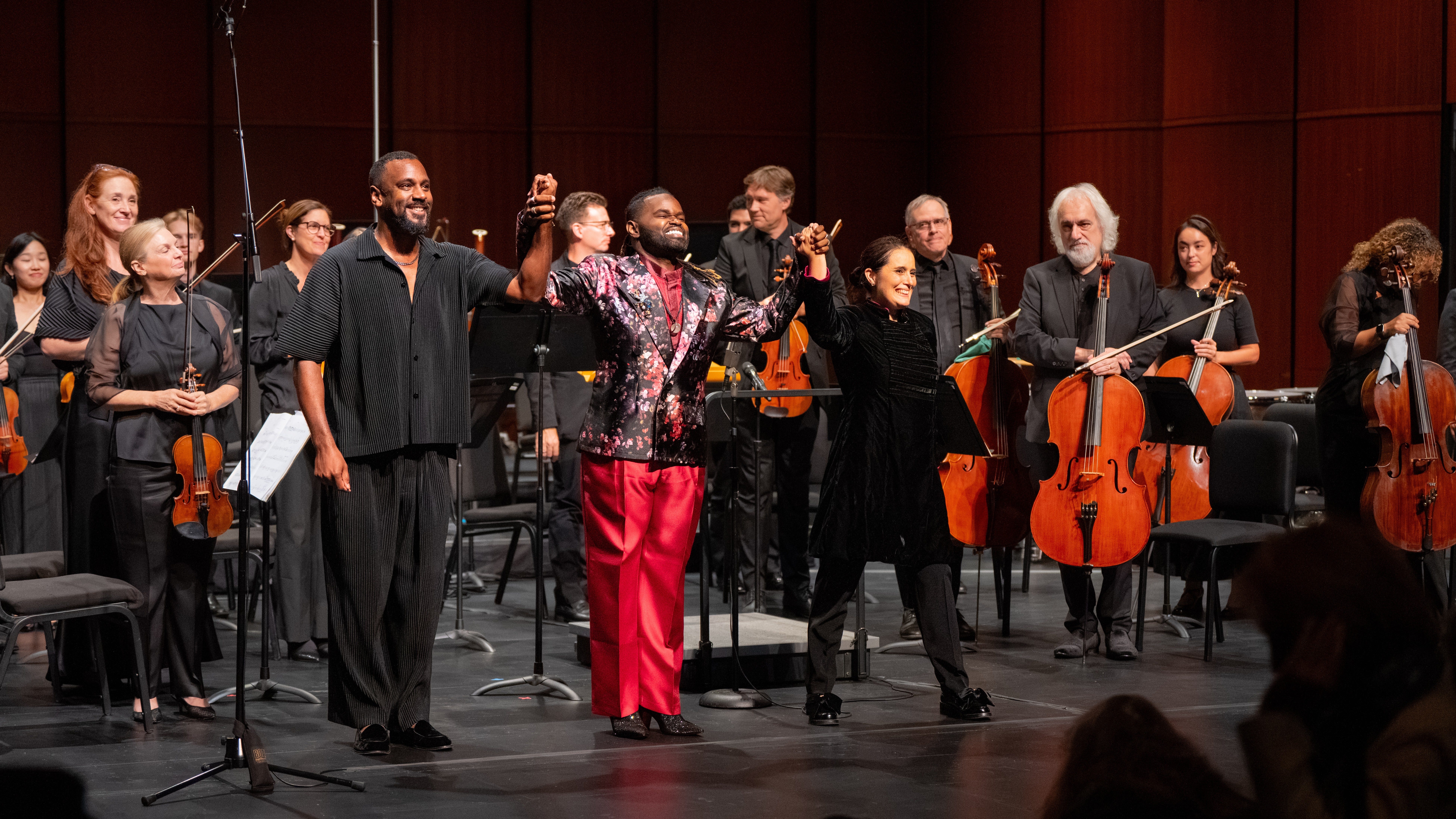
The evening’s highlight, however, was the world premiere of Afterparty, a brilliant new song cycle by American composer Carlos Simon. This setting of six poems by writers of the Harlem Renaissance, for the unusual combination of countertenor soloist with chamber orchestra (harp, percussion, strings), draws heavily on vernacular sources and has the potential to become a new American classic.
Sung with clarity and beauty by renowned countertenor John Holiday, familiar to local audiences from his appearances with the Los Angeles Philharmonic and Los Angeles Opera, Afterparty takes its name from a famous 1924 New York dinner party attended by elite members of Harlem’s creative community, that is widely recognized as a seminal event in Black literature and culture.
The texts (by Gwendolyn Bennett, Annette Browne, Ethel Caution-Davis, John Wesley Work, and J. Pauline Smith) examine the idea of black identity from a variety of perspectives.
“To a Dark Girl” celebrates the beauty of “brownness,” and becomes a delicate dance with harp. “What the Mirror Said” stubbornly affirms “I am what I am,” punctuated by verbal refrains, marimba, and florid coloratura passages. “Little Brown Boy,” a lilting ballad, asserts softly that “loveliness can dwell within a little boy.”
“To…” addresses God’s love of all humanity and paints a broad movie-score canvas. “The Crisis” confronts racism head-on. Fierce attacks in the strings and wood block express the poet’s anger and frustration.
“A Prayer,” sends a tender plea heavenward to “Use me for my race.” Here, Simon seems to summon up the ghost of Dido’s lament, “When I am Laid to Rest,” from Henry Purcell’s Dido and Aeneas.
Simon employs different musical styles, all of them tonal and highly accessible. The settings rely on the glorious voice of Holiday (for whom the work was written), a remarkable instrument that climbs smoothly to the highest reaches of the countertenor range, without apparent effort or strain. He crooned, argued, cajoled, and seduced, adopting an improvisational manner that invoked great jazz vocalists.
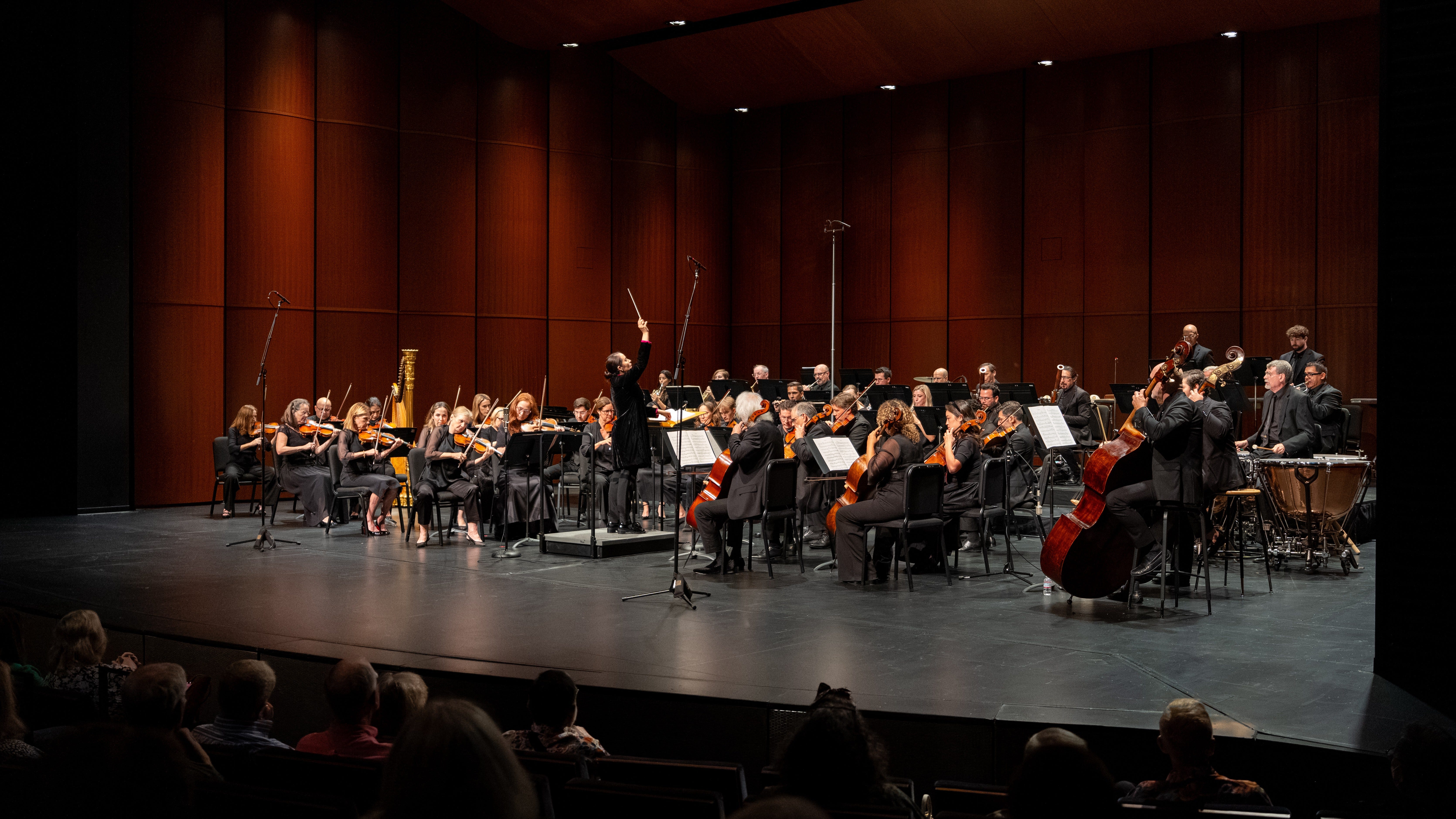
The orchestra opened with a spirited and authentic account of Dances of Galanta, with a fine contribution from clarinetist Joshua Ranz, whose several extended solos had just the right piquant flavor. González-Granados varied the tempi nicely, from languid to feverish and back again.
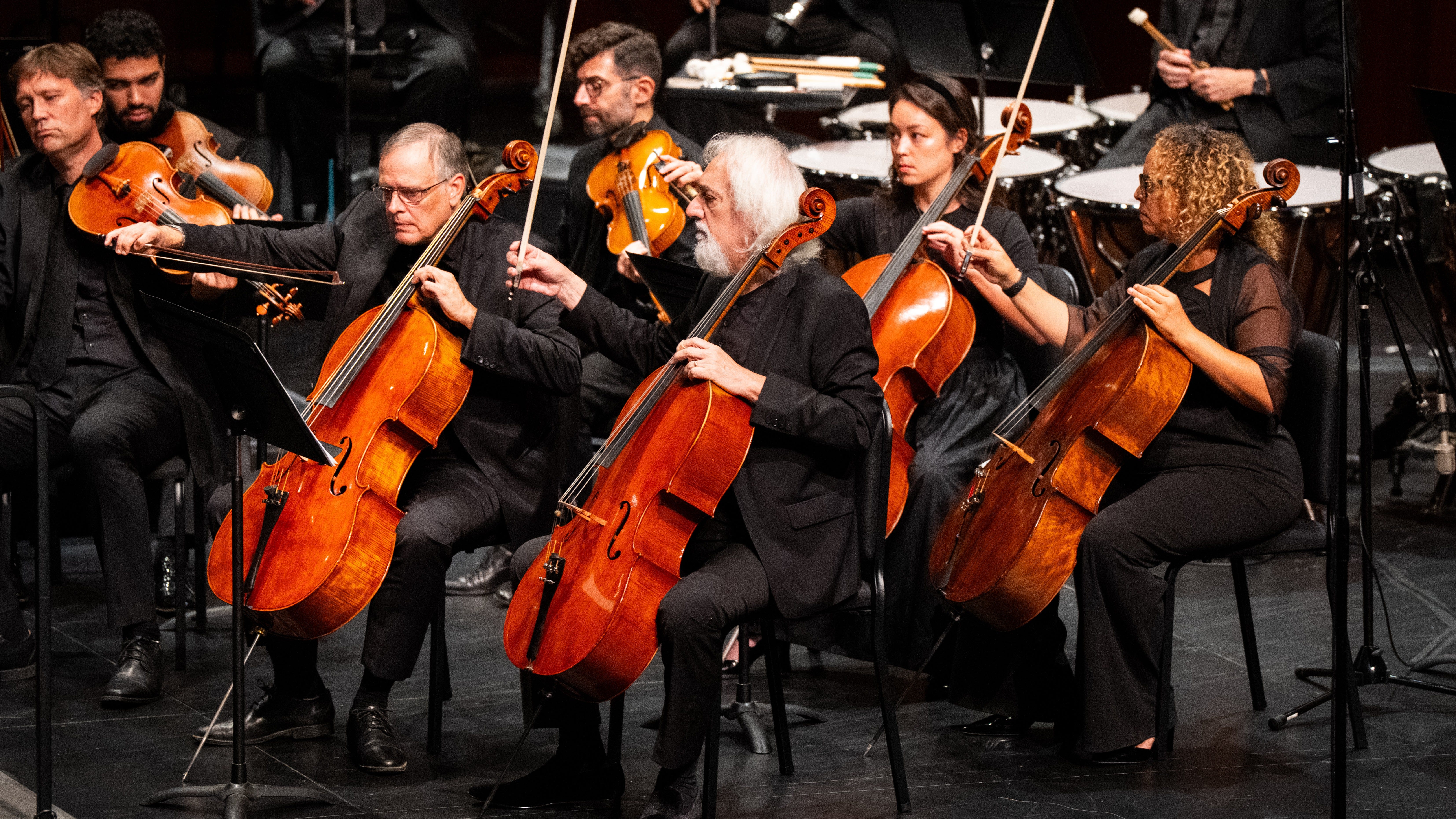
In the gradually unfolding sonic vista of Elegía Andina, flutists Sandy Hughes and Elvin Schlanger imitated the sound of Peruvian double-row panpipes, and percussionists Greg Goodall, John Wakefield, and Jonathan Schlitt provided picturesque rhythmic background on temple blocks and timpani.
Suite No.1 from De Falla’s Three-Cornered Hat, another example of folk styles becoming rich material for the concert hall, was written for Sergei Diaghilev’s Ballets Russes, in 1919. Its lively music and antic story of village life became an instant and lasting success. Bassoonist Jonathan Stehney made the most of his humorous portrayal of a pompous local official making a fool of himself as he awkwardly pursues a clever young maiden’s affections. It brought the evening to a satisfying close.